Alexandra Stréliski on Montreal, hybrid performance and the enduring power of live art
Montreal has established itself as a leading hub for artistic creation and exchange in North America. This openness to cross-disciplinary collaboration is at the heart of the CINARS Biennale 2026, which brings together artists and performing arts professionals from around the world.
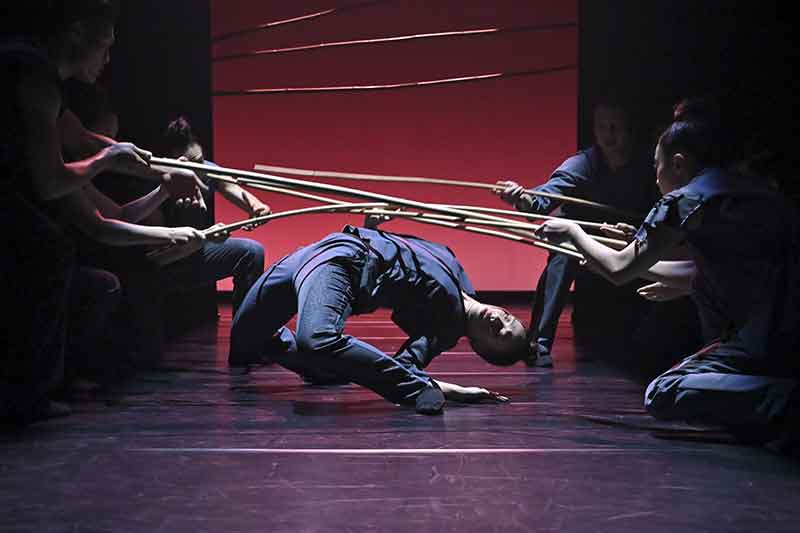
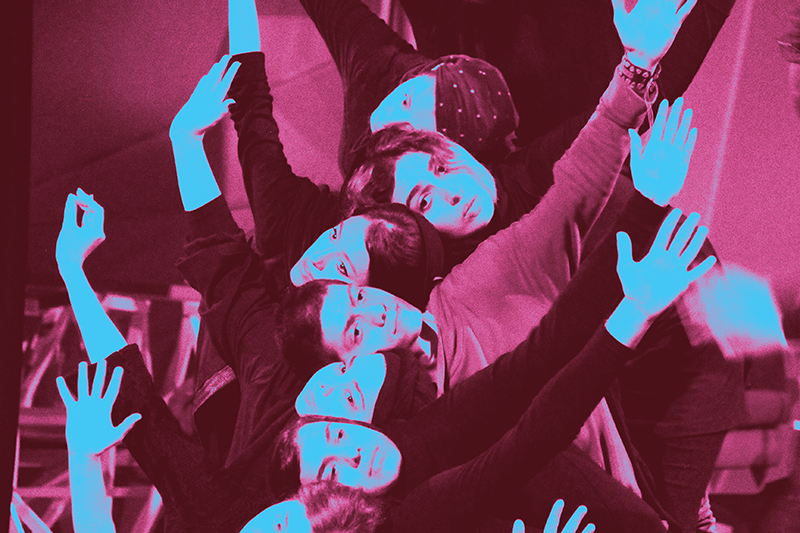
For this edition, Gilles Doré, Executive Director of CINARS, sits down with Montreal-based pianist and composer Alexandra Stréliski. A leading figure on Montreal’s music scene, she performs live on piano alongside Cirque Le Roux in Entre chiens et louves, the opening production of the Biennale. She reflects on the origins of this collaboration, the dialogue between her intimate, cinematic music and the physical world of circus, and the role Montreal continues to play in her artistic journey.
Your collaboration with Cirque Le Roux is one of the standout hybrid projects of the 2026 Biennale. How did this dialogue between your two worlds begin?
Greg [Grégory Arsenal] and I met when we were very young. I was studying music at university, and he was attending the National Circus School of Montreal. We lived in communal houses with very artistic people. That’s when we began collaborating – street performances, multidisciplinary events, and so on. It was very bohemian, but we quickly realised how seriously we both took our work. Over time, it grew into a very ambitious professional journey.
Montreal is often seen as particularly fertile ground for interdisciplinary collaboration and artistic experimentation. In your view, is there something specifically Montreal about this openness to hybrid forms, or is it part of a broader global movement?
Yes. I think Montreal, at least the Montreal I grew up in, is a particularly hybrid city. The specific cultural context of Quebec has helped preserve a distinct identity, influenced by Europe while also being very “American” in the diversity of the people who live here. That’s one of the things I particularly love about it. For me, the arts intersect here because people are fundamentally diverse and open-minded.
Your music is often described as deeply intimate, almost cinematic. What happens when it enters into dialogue with the physical and visual virtuosity of circus?
It’s somewhat like composing music for a film: the music is given more time to unfold. The body is constantly changing in terms of rhythm, and because it’s an organic dialogue, it allows us to be freer with tempo. It also makes the approach more direct. The music generally needs to be more narrative, because there is usually less dialogue to explain the context to the audience.
The Biennale also places an important emphasis on young audiences, highlighting the importance of nurturing a love of the arts from an early age. Looking back on your own journey, is there a formative artistic experience that deeply shaped your relationship with music and the stage?
When I was a child, my parents took me to see The Nutcracker, and I remember being completely captivated by that world, the music telling the story, the dancing, the sets…
At a time when digital platforms have a strong influence on the way we experience attention and emotion, what can the performing arts still offer that is truly irreplaceable?
Without a doubt, something essential. Live performance remains one of the few spaces where art is still welcomed in its full duration. One of the challenges of digitalisation is the increasingly short attention span of audiences. The stage still allows us to develop ideas, push creative ideas further and offer people a much deeper and more enriching experience.
Finally, what does Montreal represent for you today as an artist?
For me, Montreal is the comfort of home: the place where I reconnect with my audience, my family, my friends, all the restaurants, streets and places I grew up with. At the same time, it’s an incredibly vibrant and innovative city that never stops changing. The music and arts scene in Montreal is truly fantastic. There’s never a dull moment.