Navigating change and reinvention
The French performing arts sector is undergoing a period of profound transformation that is reshaping traditional presentation and touring models, compelling the field to rethink how work is programmed, partnerships are developed, and artistic works circulate. The sector’s entire value chain is being redefined, from management models and the ecological transition to changing audience behaviours and evolving public expectations. Despite these significant challenges, the sector continues to demonstrate a remarkable capacity for innovation.
Two key organisations are driving this transformation: the Office national de diffusion artistique (ONDA), which supports the presentation of contemporary artistic creation and the circulation of works throughout France, and the Association des Scènes nationales, a leading network dedicated to supporting artistic creation and bringing contemporary work closer to communities across the country.
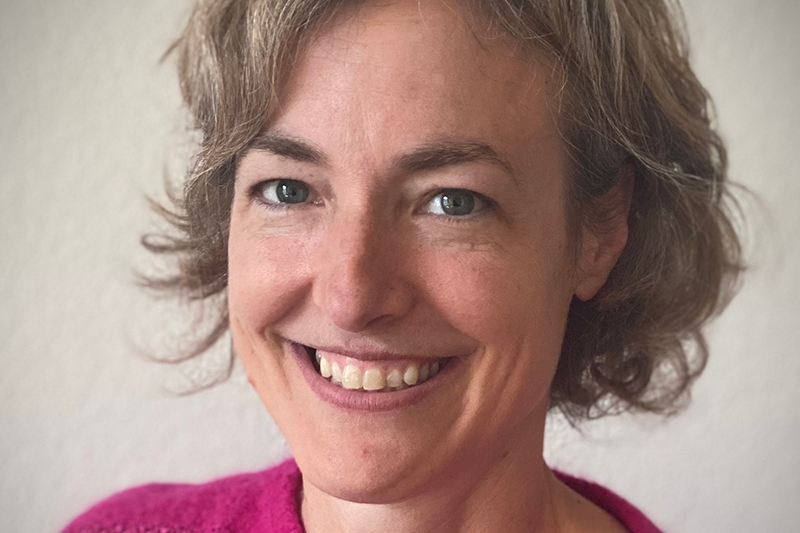
Gilles Doré, Executive Director of CINARS, speaks with Marie-Pia Bureau (left), Director of ONDA, and Fabienne Loir (right), Secretary General of the Association des Scènes nationales, about the sector’s current challenges, promising
initiatives and France’s role within the international performing arts ecosystem.
Gilles Doré (GD): What are the major transformations currently affecting the performing arts sector, and how is your organisation adapting to them?
Marie-Pia Bureau (M-PB): In France, the publicly funded performing arts sector is being hit hard by an economic crisis. For many organisations and cultural operators, the very legitimacy of publicly funded cultural action is now being called into question.
Fabienne Loir (FL): Our response is multifaceted: greater adaptability, resource sharing and sustained collaboration with partners including ONDA, the Institut français and project-based funding initiatives. It also involves evolving professional practices and skills, and stronger engagement with both communities and audiences. Today, the performing arts are encouraging us to work differently across territories, developing genuine place-based projects rooted in local communities.
M-PB: At the same time, the traditional model of producing a work and then recouping its costs through touring is becoming increasingly unsustainable. Creation and presentation budgets are shrinking, while organisations have less capacity to take artistic risks.
GD: How are relationships between presenting venues, companies and local communities evolving in response to these new realities?
FL: Our objectives are to expand the reach of the Scènes nationales, particularly in rural areas, to enable artists to spend extended periods working in close connection with local communities, and to strengthen partnerships at the local, national and international levels.
M-PB: For ONDA today, presentation is no longer simply about touring a production from one venue to another. It is also about imagining forms of artistic “infusion” within communities – process-based projects that bring together creation, knowledge transmission and meaningful exchange with local residents. The time artistic teams spend in a place has become just as important as the number of performances they give.
GD: In the face of shrinking resources, what strategies for adaptation and collaboration are emerging?
M-PB: We support these transformations in several ways. First, by fostering knowledge exchange – documenting practices, highlighting pioneering initiatives and creating opportunities for dialogue between organisations. We also provide financial support for experimentation by sharing the risks with presenting organisations, investing in longer-term, more hybrid approaches that may not generate immediate financial returns but create lasting relationships with communities.
FL: The governing bodies of the Association des Scènes nationales have reaffirmed several strategic priorities. These include advancing ecological, digital and AI-related transitions, strengthening communication with elected officials, supporting reflection on the evolution of professional roles and nurturing the next generation of leaders across the network.
GD: What role can France play within international performing arts networks?
M-PB: Internationally, economic pressures often make international programming the first area to face cuts, even though today’s challenges call for greater openness rather than retreat. We encourage initiatives that rethink models of international co-operation. These include mixed creative teams, co-productions conceived collaboratively from the outset across several countries, and projects developed through genuine dialogue with local contexts.
We believe France can play the role of a demanding yet supportive partner within international networks, provided it embraces its own internal diversity and avoids reproducing historical power imbalances.
FL: The Scènes nationales develops multidisciplinary programming, hosts artists-in-residence, organises festivals, touring productions, arts education and cultural engagement initiatives, and works year-round with local authorities, community organisations, schools, social services, businesses and many other partners. This ongoing collaboration is the network’s greatest strength.
GD: If you had to summarise, in one sentence, the vision you wish to embody for the future, what would it be?
M-PB: We know that every constraint can become an opportunity when it is addressed collectively and politically. Our role is to support this shift: to help everyone look beyond the immediate challenges, transform crises into opportunities for reinvention, and make presentation not simply a means of filling theatres, but a driver of democratic, social and ecological transformation within the performing arts.
FL: Community engagement, cooperation among stakeholders, resource sharing, and ecological, digital and social transitions now form the foundations of a network capable of supporting artists, venues and local communities over the long term.