The International Society for the Performing Arts (ISPA) is a global network of over 500 leaders from 60 countries, dedicated to strengthening and advancing the performing arts worldwide.
Through its congresses, leadership programmes and year-round initiatives, ISPA fosters connection, exchange and innovation across the international arts community.
ISPA’s Fellowship Program supports emerging and mid-career arts leaders worldwide through congress participation and leadership development. Alongside its Global Program, ISPA offers 11 Regional Fellowships in partnership with regional funders.
Upcoming Events
ISPA Series at the Fringe
October 2026
ISPA 2027 New York Congress
12–14 January 2027
Join ISPA’s Membership today and be part of the network shaping the future of the arts, visit www.ispa.org
Hear from members of the International Society for the Performing Arts (ISPA) about their work across global regions
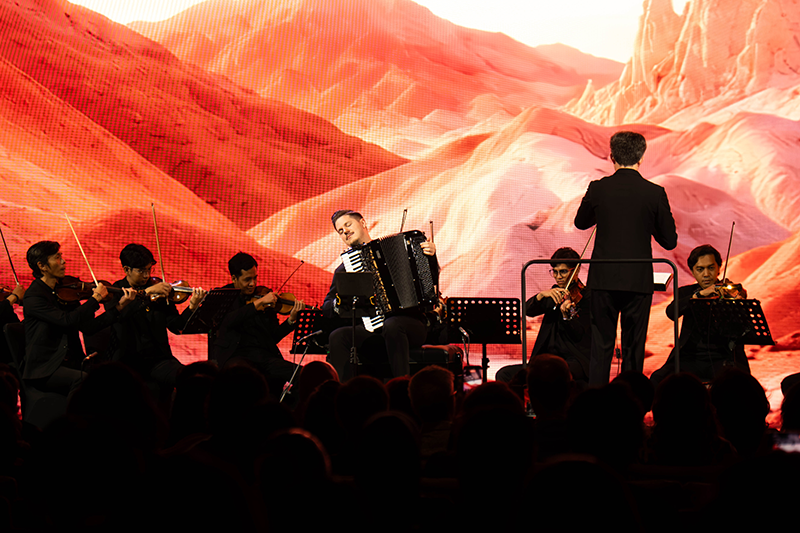
ARC Sudirman: Building a performing arts platform in Jakarta
Robert Mulyarahardja, Program Director at ARC Sudirman, on creating a space where diverse artistic traditions meet, and where curiosity can grow.
Jakarta’s art scene resists easy definition. Different cultural influences have long coexisted, evolving and taking on new forms. That diversity is reflected in the genres and cultural references audiences encounter across the city, though deeper engagement does not always follow. This breadth of exposure shapes how we think about programming at ARC Sudirman.
ARC Sudirman is a performing arts centre in the heart of Jakarta. ARC stands for Arts, Resonance and Culture. We created it as a year-round platform to introduce Jakarta audiences to a wider range of artists and performances, give each programme the right setting, and become part of the city’s cultural life over time.
Sudirman Hall, our main venue, seats 350 people. Its scale creates an intimate setting between performers and audiences, so we favour work that benefits from that proximity and allows detail, interaction and presence to come through clearly.
Our 2026 programme explores this approach. In July, Moldovan accordionist Radu Rățoi performed with Indonesia’s Klassikhaus chamber orchestra, exploring tango repertoire. In August, Japanese pianist Toru Oyama joined Jakarta Sinfonietta for Echoes Across the Sea, bringing together Japanese, Indonesian and European repertoire. In September, Yutong Sun will appear in a solo piano recital centred on Mussorgsky’s Pictures at an Exhibition. In October, the Alfredo Rodríguez Trio will reimagine familiar songs through Afro-Cuban rhythm and jazz improvisation; saxophonist Joshua Redman will also be performing.
The programmes are deliberately different. What connects them is an interest in giving audiences opportunities to explore artists, repertoire and musical traditions more closely. As ARC develops, we hope to broaden the programme to include theatre, dance and multidisciplinary work. The experience may also extend beyond the performance through artist talks, workshops, projected imagery or stage visuals.
ISPA has been valuable as we develop these ideas. Learning how colleagues in different cities approach programming, audience development and artist relationships offers both perspective and practical insight. It has also given us a wider community for exchanging ideas across contexts.
ARC is still relatively new, and as we grow, we want to understand what encourages audiences to look beyond what they already know and connect more deeply with unfamiliar artists, repertoire and ideas. In a city of broad cultural exposure, we hope ARC can become a place where curiosity has room to grow.
To learn more, visit arcsudirman.com
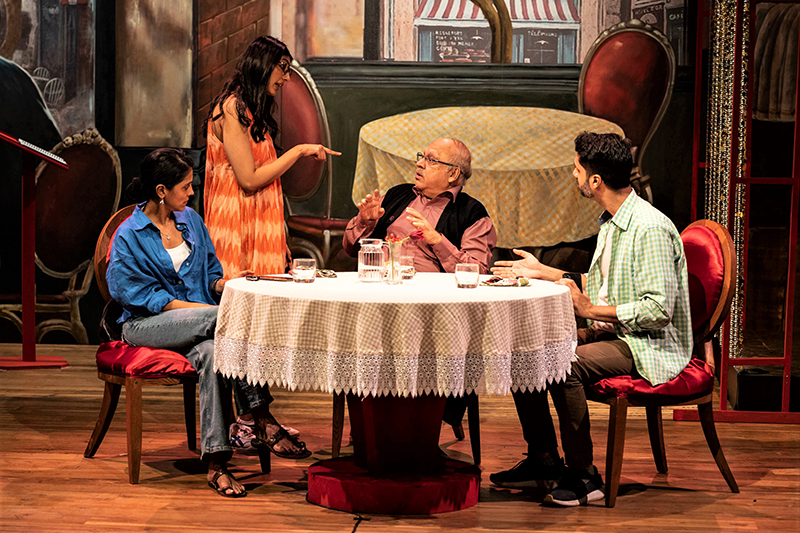
ISPA Global Fellow Saatvika Kantamneni (Producer, Akvarious Productions) discusses India’s unique independent theatre ecosystem and her role in training new Indian producers
There have always been producers in India’s performing arts. Maybe not in title, but certainly in tasks. These tasks enable artistic visions, bring collaborators together, manage resources, find audiences and ensure that performances happen.
India’s independent theatre ecosystem has largely evolved without many of the structures that theatre sectors elsewhere take for granted. For many organisations, permanent venues are rare, public funding is limited, and formal producing pathways have only recently begun to emerge. Companies therefore built the work first and developed the systems to sustain it over time.
Like many producers here, I didn’t set out to become one. I grew into the role through the work itself as producer at Akvarious Productions over the past seven years. Founded 25 years ago by Akarsh Khurana, Akvarious has built an extensive body of original work while touring nationally, adapting to diverse performance contexts and sustaining itself without institutional support. Working alongside that history has meant contributing not only to the productions we make, but to the way the company evolves. My role is to help ensure that each production contributes to something larger than itself: the growth of the company, the relationships it builds and the future it is trying to create. Every decision asks not only how a production will happen, but also why, where it should travel, who it should reach and what it might leave behind once the curtain comes down.
As my understanding of producing evolved, so did the conversations I was having with Vivek Madan, founder of Bhasha Centre. We realised that most producers we knew had arrived at the role by circumstance rather than design. Organisations increasingly recognise the need for producers, yet few opportunities exist to intentionally develop them. That led us to create Think Big, Think Small, a producer development programme. In trying to teach producing, we first had to ask ourselves what we meant by it.
Designing the programme gave us language for a philosophy we had both been practising: producing isn’t just about managing or executing a plan. It is a creative practice that shapes how artistic ideas take form and how audiences ultimately experience them.
Many of the questions now facing arts organisations around the world are familiar ones: how do we sustain organisations, develop audiences, nurture producers and build work that lasts beyond a single production? India’s independent theatre movement has been grappling with these questions for decades. Our responses have inevitably been shaped by our own cultural traditions, economic realities and organisational constraints. The ISPA Global Fellowship gave me the opportunity to place those experiences alongside those of colleagues from around the world. Not to find a blueprint, but to compare the different ways our histories have shaped our approaches. There is as much to learn from how we make theatre as from the theatre we make.
Join ISPA at the Edinburgh Festival Fringe for the ISPA Series at the Fringe: Resilience in Action (19 August 2026), the New York Congress (12–14 January 2027), and at the mid-year congress in Uppsala, Sweden (8–11 June 2027).
For more information on ISPA’s congresses and upcoming programmes, visit www.ispa.org