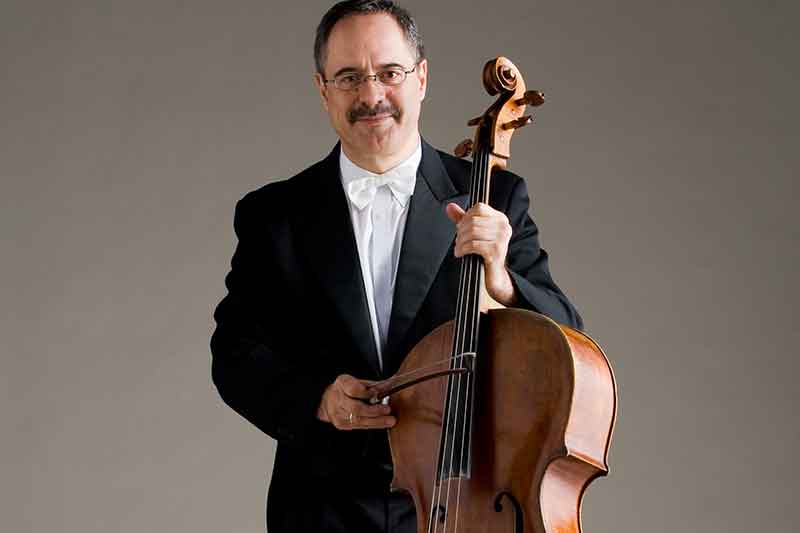
Fondly known as Indiana University’s “Mr Fix-It”, the Polish-born violinist transformed technical obstacles into artistic possibilities and built a worldwide family of players, colleagues and occasional footballers
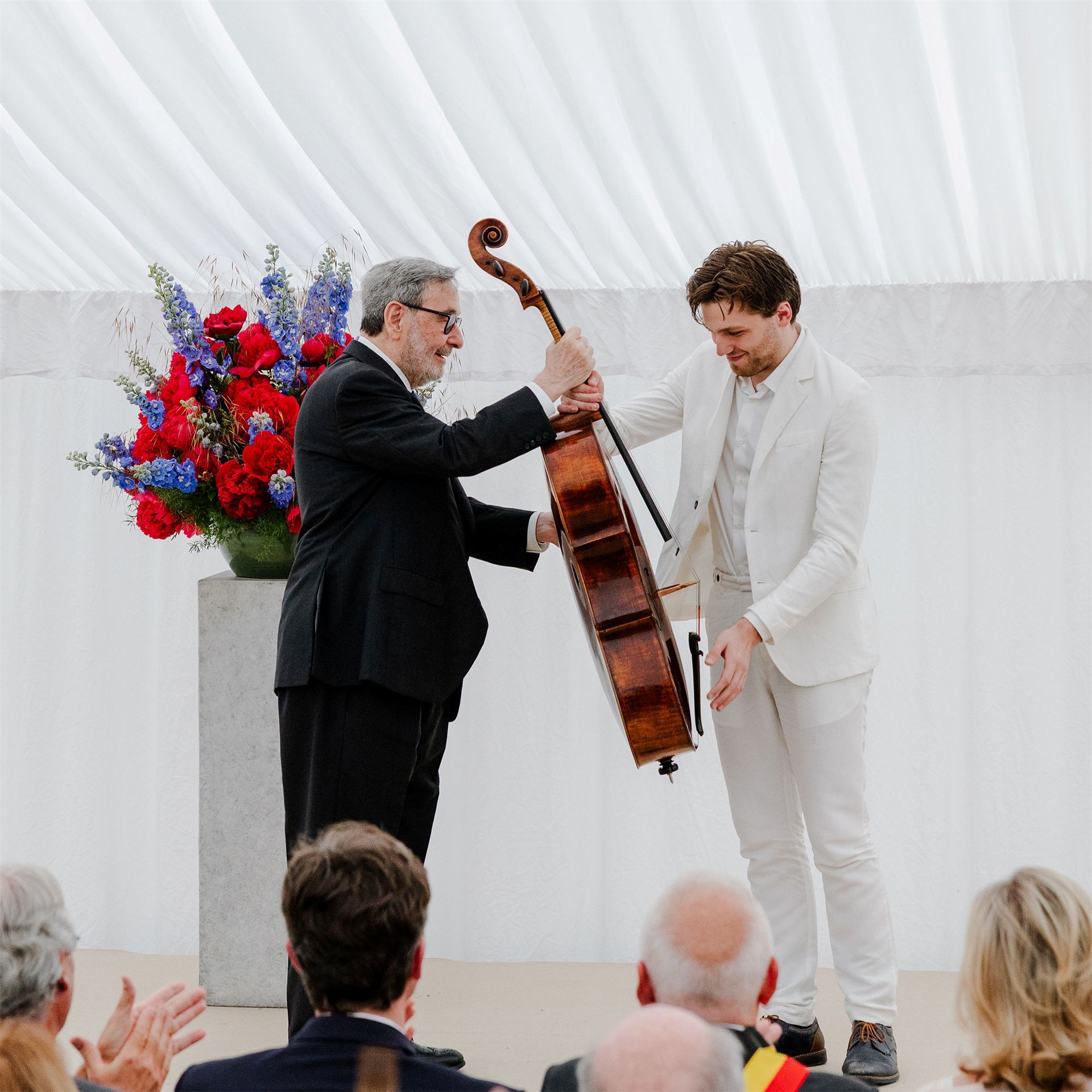
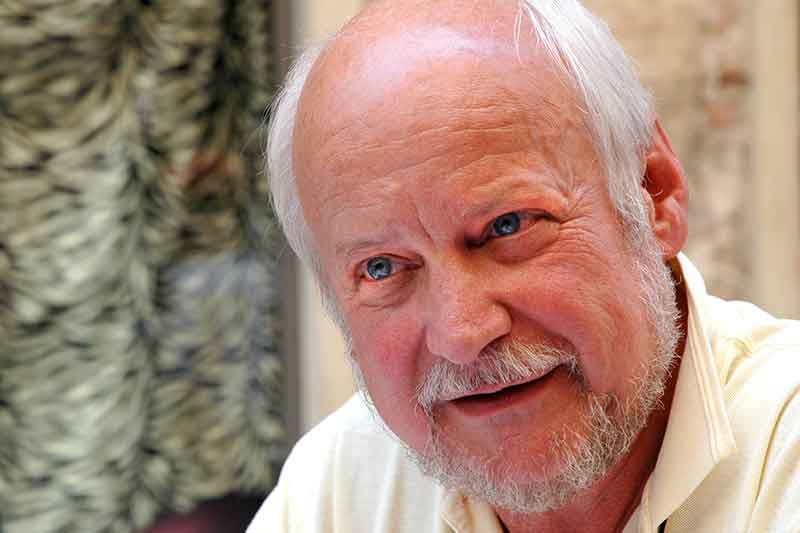
Henryk P. Kowalski’s death at 78 marks the loss of a gentle giant: a violinist and teacher of immense seriousness, generosity and practical genius. Polish-born, proudly Danish by citizenship and at home in America and Sweden, he belonged to that increasingly rare breed of pedagogue whose influence endures not in any accumulation of honours, but in the musicians who still hear his voice at difficult moments.
Kowalski was not simply a hard taskmaster. He believed that technique existed for character: for colour, rhetoric, direction and musical meaning. A technically secure performance that had nothing to say was, in his view, only halfway there.
Born in Warsaw in 1947 into a musical family, Kowalski studied with Tadeusz Wroński, a central figure in the Polish violin tradition. He also briefly pursued another musical life, co-founding the jazz group Asocjacja Hagaw in 1964. Its combination of swing, traditional jazz and Eastern European colour earned the group a devoted following in Poland. Yet his teachers warned that jazz might not be good for his classical development, and Kowalski largely left public improvisation behind. The rhythmic alertness, individuality and intensity, however, never entirely left him.
In 1968, amid Poland’s anti-Jewish campaign, Kowalski was forced to leave the country before completing his graduation recital. At Indiana University, where Wroński was then teaching, he continued his studies with Josef Gingold, receiving an artist diploma in 1974. His chamber-music mentors there included William Primrose, Menahem Pressler, János Starker and György Sebők – figures he would join as a faculty colleague in 1975, serving as professor of violin from 1991 to 2011.
He also taught at Stockholm’s Royal College of Music, becoming professor in 2006. As a performer he appeared with orchestras across Europe, Asia and North America, while his Trio European – with his cellist brother Jakob and the Belgian pianist Jean-Claude Vanden Eynden – toured widely from 1977 to 1989. Yet it was in the teaching studio that he found his fullest purpose: his students include Andrej Power (Concertmaster, Royal Stockholm Philharmonic Orchestra and the LSO), Ami Davolt Campbell (Assistant Concertmaster, Dallas Opera), Andrew Ling (Principal Viola, Hong Kong Philharmonic Orchestra) and Glen Kwok (Executive Director, International Violin Competition of Indianapolis), among many others.
Within Indiana University’s formidable string department, Kowalski became known as “Mr Fix-It”. Colleagues sent him students whose problems had resisted conventional solutions: a tense bow arm, an insecure shift, a right hand that would not settle, a sound that refused to travel beyond the practice-room door. He had a rare diagnostic gift: the ability to locate the cause beneath the symptom, then to explain a way forward in terms a student could actually use.
That explanation could begin, quite often, with open strings. Months of them, if necessary. Students learned to apply weight rather than pressure, to control bow speed, to recognise unwanted surface noise and to develop a sound that was free, sustained and alive. For Kowalski, these were not remedial chores but the foundation of artistic freedom. He could hear tiny details that others missed, and he expected his students to cultivate the same mercilessly attentive ear.
He gave time with unusual generosity. A scheduled weekly lesson was more an administrative suggestion than a limit. Before auditions, competitions or recitals, students found that Kowalski somehow had another hour available. He did not reserve this effort for obvious stars. A player at any level was, once admitted to his studio, a responsibility.
There was a characteristic irony to his gifts as a teacher of performance. Kowalski himself suffered from considerable nerves and could revisit a concert afterwards with forensic concern for every phrase, colour and slide. Yet this made him unusually persuasive with anxious students. He understood the concert platform not as a theoretical challenge but as a place where preparation, imagination and fear meet in sometimes uncomfortable proximity.
He was also deeply old-school. Respect for teachers and colleagues mattered; so did handshakes, promises, student concerts and the ordinary rituals of institutional musical life. His studio was a global family. International students unable to travel home for holidays found a place at his table and remained part of the family long after they graduated.
In summer, that family also found itself on a football pitch. Kowalski’s visiting students became known, affectionately, as holders of “soccer scholarships”, an unofficial arrangement under which violin study and summer matches appeared to be inseparable. He was generous, but not sentimental: a weak bow stroke and an unreliable pass could both receive candid assessment.
The classical music profession has no shortage of brilliant instrumentalists. It has fewer people able to meet a flawed bow stroke, a frightened young player or an entire studio of varied talents with patience, rigour and humane conviction. Henryk Kowalski did that work fiercely and exceptionally well. He taught violinists to make a sound. More importantly, he taught them that it had better mean something.
Florian Riem