Remembering Günter Pichler
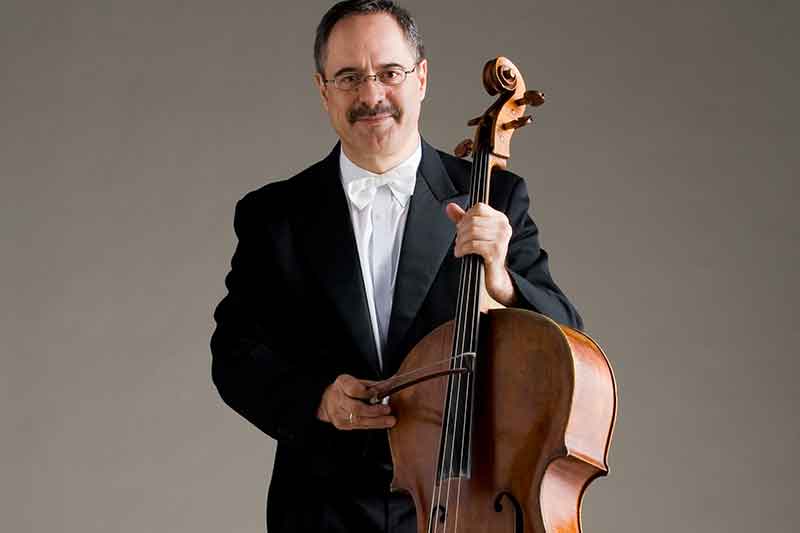
The death of violinist Günter Pichler marks the end of an era in chamber music. For more than four decades, he stood at the centre of quartet playing as leader of the Alban Berg Quartett, an ensemble that fundamentally reshaped the international standing of the string quartet after 1970. Countless musicians admired him, feared him slightly, argued with him, learned from him and ultimately loved him.
Pichler’s career began with astonishing speed. Born in Kufstein, Austria, in 1940, he studied in Vienna and quickly established himself as one of Austria’s leading young violinists. At only 18, he became concertmaster of the Vienna Symphony Orchestra under Wolfgang Sawallisch. Three years later Herbert von Karajan appointed him concertmaster of the Vienna Philharmonic and the Vienna State Opera Orchestra, an extraordinary position for a musician barely in his twenties. Although his time there was relatively short, it placed him at the heart of Vienna’s orchestral tradition at a formative moment in his career.
Yet orchestral life was never going to be enough for him. In 1970 he founded the Alban Berg Quartett, and what followed was one of the most influential quartet careers of the late 20th century. For decades, the ensemble combined an unmistakably Viennese sound with intellectual rigour, stylistic discipline and a rare sense of collective responsibility. Their performances and recordings of Beethoven, Schubert, Brahms, Haydn, Mozart and the Second Viennese School became reference points for audiences and musicians alike.
Pichler was the unquestioned musical leader of the ensemble. Rehearsals under him could be notoriously intense. His temper was famous, and former students and colleagues recount endless stories of explosive interruptions over articulation, intonation, ensemble timing or simply a phrase that, in his view, lacked character. What made these moments memorable, however, was not merely the severity but the speed with which they passed. Outbursts would come, everyone would survive it, and shortly afterward Pichler would return to being warm, funny, self-deprecating and often unexpectedly gentle. Beneath the demanding exterior there was little vanity. He cared deeply about the music and expected others to do the same.
In later years his influence as a teacher became at least as important as his performing career. The list of quartets connected to his teaching reads almost like a roll call of contemporary chamber music life: the Artemis Quartet, Belcea Quartet, Cuarteto Casals, Schumann Quartet, Goldmund Quartet, Leonkoro Quartet, Arete Quartet and many others were shaped in part by Pichler’s demanding but deeply engaged musical mentorship.
What distinguished Günter Pichler was not only musical authority, though he possessed that in abundance, but a rare combination of discipline and humanity. He could be uncompromising without becoming cynical, severe without losing warmth. Many musicians who initially encountered him with apprehension later spoke of him with enormous affection and gratitude.
There is also something painfully symbolic about the circumstances of his death. He died in a car accident on the way to Gneixendorf, the village where Beethoven composed his late string quartets. Pichler devoted much of his life to these works, returning to them repeatedly as performer, teacher and thinker. One hesitates to draw meaning from coincidence, yet for those who heard him play Beethoven over the years, the connection feels difficult to ignore.
Florian Riem