

The work was never meant to be carried alone
By Lisa Richards Toney, President and CEO, Association of Performing Arts Professionals (APAP)
Many of us have been trained to solve problems in isolation. One organisation moving alone. One plan built inside our own walls. One ask made with no other institution’s weight behind it.
That training prizes competition and scarcity over the belief that there is enough for everyone. Once art becomes something to be sold and funded competitively, access to funders can start to feel like the asset itself. The real asset may be the model we could build together – specific enough that others could join it or build their own version. But that system is buckling. Old sources are drying up. Familiar paths are narrowing. The isolation that the system trained into us is no longer uncomfortable.
It is untenable.
Art originates in culture. Parts of this field drifted from that origin as professionalisation took hold. Others held on. Many of us who hold titles that come with an expectation of leadership – president, executive director, producer – started as artists. I know this from the field I am doing my best to help steward, and from the communities and traditions that shaped me. We know in our bodies what rehearsal teaches, and what other people’s eyes see that we cannot catch alone. No single dancer produces the feeling an audience carries from a room. That comes from something between people.
That instinct never left the work itself. A production needs a lighting designer’s eye, a stage manager’s timing, a director’s ear – dozens of kinds of attention layered together before anything reaches an audience. What much of our field has stopped doing is carrying that instinct into rooms where funders, public agencies and institutions outside the arts are already working on problems our work could help solve. We need a place in those rooms, and we need to claim it, not wait to be handed one.
What we may have forgotten
And we should be careful about treating collective practice as a solution we have newly discovered. ILBIJERRI Theatre Company in Australia has spent two decades building health work with government and health agencies through a methodology that explicitly privileges Indigenous knowledge and cultural values and is devised “with Community, for Community”.¹ Collective practice is not new. As we revisit it now, we should be rigorous about where these ways of working come from – and what we may need to dismantle in our own structures for collective practice to actually be collective: who holds authority, whose knowledge counts, how resources move and who defines the outcome.
We have seen movement within our own ecosystem. In 2021, the Mellon Foundation gave APAP $3 million to create ArtsForward, bringing presenters and artists together as the field navigated pandemic reopening and recovery.² The programme required every application to be submitted jointly by a presenter and an artist or ensemble. That structure mattered: the relationship itself was part of the model. Neither side was meant to carry the work alone.
What might become possible when we bring that same instinct into relationships with other fields? In Ahmedabad, India, the Actor–Doctor Project brought theatre professionals and medical specialists together around a public-health challenge. Twenty street-theatre performances addressed five health themes. A study of 486 participants found that audiences showed greater knowledge of environmental health and anaemia and greater openness to discussing sexual health than a control group.³ Here, artistic practice was not an adornment to someone else’s solution. It was part of how the problem was addressed.
Start with what matters
Writing from the Western Arts Alliance conference in Oakland, I keep thinking about a panellist’s suggestion: move from asking, “What’s the matter?” to asking, “What matters to you?” The questions sound almost the same but lead somewhere very different. One begins with the problem; the other begins with what someone values, needs or hopes to protect. That is where more meaningful partnership can begin.
And we are not arriving empty-handed. Americans for the Arts found that non-profit arts attendees in the US spend an average of $38.46 beyond admission, and 77 per cent of non-local attendees said the cultural event was the primary purpose of their trip.⁴ But our value is not only economic. We hold gathering places, relationships, audiences, artists, cultural knowledge and local trust.
Nor is the lesson simply that we need more partnerships. The arts often enter cross-sector work with fewer resources and less perceived institutional power. Without clarity about what we hold, what we need in return and how success will be measured, partnership can reproduce the imbalance we hoped to disrupt. We can contribute relationships, creative capacity and community trust – and still leave without the resources or structural change the partnership was meant to produce.
The urgency is real. Working differently must help us remain viable. We need to choose partners intentionally, remain curious about what matters to each of us, and be rigorous about where our interests meet, so resources, knowledge, responsibility and benefit move in more than one direction. None of us can secure the future of the arts by protecting our own corner of it.
The work was never meant to be carried alone. The future of the arts cannot be secured that way either.
Selected sources:
- ILBIJERRI Theatre Company, Social Impact Program. 2024.
- Association of Performing Arts Professionals, “Association of Performing Arts Professionals receives landmark funding from The Andrew W. Mellon Foundation to support the reopening of the performing arts industry,” 15 September 2021.
- Kartik Sharma et al., “Actor–doctor partnership for theatre-based public health education,” Health Education Journal, 2021.
- Americans for the Arts, Arts & Economic Prosperity 6. 2023.
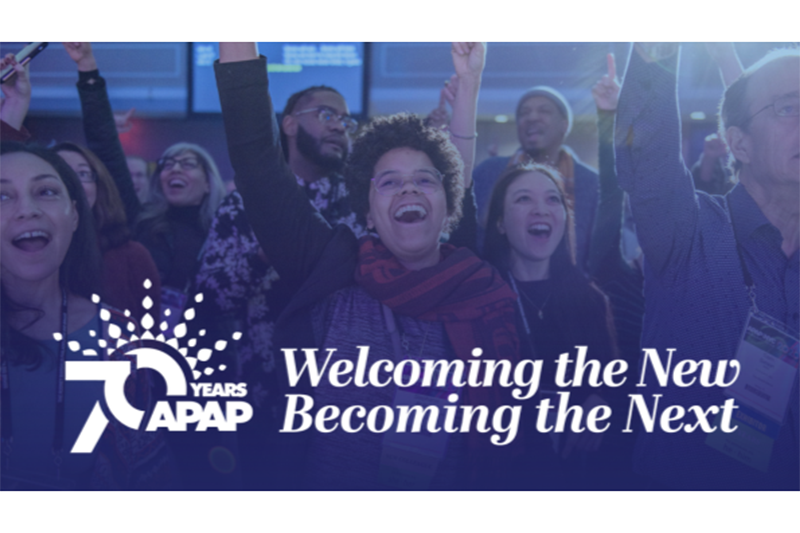
APAP marks 70th anniversary and invites the field to share the moments that became their history
The Association of Performing Arts Professionals (APAP) will celebrate its 70th anniversary – its Platinum Jubilee – at APAP|NYC 2027, 14 January at the New York Hilton Midtown, under the theme “Welcoming the New, Becoming the Next”. The conference marks seven decades as connective infrastructure for the performing arts field, linking more than 1,600 presenters and thousands of arts professionals worldwide across presenting, booking and programming.
The anniversary arrives as APAP pushes for broader recognition of the performing arts as essential civic and economic infrastructure, in every country and community it touches.
As part of the celebration, APAP is asking past honourees, plenary speakers, panellists, longtime conference participants and organisational partners to be part of the anniversary and to share their perspective on how the field has changed – and what it will take to carry it another 70 years. Those interested in contributing testimonials should reach out to programs@apap365.org.
“Over the past 70 years, countless connections have been made at APAP|NYC – across showcases, the EXPO Hall, sessions and the many conversations that happen in between. This January, we celebrate that rich history and the moments and relationships that have shaped our field,” said Lisa Richards Toney, President & CEO, APAP.
“But an anniversary is also an opportunity to look forward. As we welcome new partners, new allies and new voices into this work, we are asking what the next 70 years can – and must – become. That means reaching beyond our own walls, building new connections and positioning the performing arts not simply to survive, but to thrive.”
Media contact: communications@apap365.org