

Reader offer:
International Arts Manager readers get 50% off with code IAM50
Tickets:
The Royal Ballet and Opera and the Musée des Beaux-Arts de Lyon are giving the next generation a more active role in cultural life. At Communicating the Arts 2026, the people behind these projects will share what they have learned
How do you make ballet and opera feel relevant to thousands of children who may never have imagined themselves taking part? How does a museum become a place where students are trusted to contribute, rather than simply encouraged to visit?
These questions matter to any cultural organisation trying to build a lasting relationship with younger audiences. Inviting them through the door is one challenge. Giving them a reason to feel that they belong is another.
At Communicating the Arts 2026, taking place in Ottawa–Gatineau from 13 to 16 October, Jillian Barker (Director of Learning and Participation, Royal Ballet and Opera) and Guillemette Naessens (Director of Communications, Musée des Beaux-Arts de Lyon) share two very different approaches: one began with children across a city; the other placed students inside the life of a museum. Both started by listening.
What happens when ballet and opera meet children where they are?
In Bradford, one of the UK’s most diverse cities and the 2025 UK City of Culture, the Royal Ballet and Opera did not present a finished programme. It began by listening and building relationships with local schools and teachers.
Over three years, the collaboration grew to include 45 schools, including dance schools, reaching 2,500 children in total. At its heart was a compelling question: could ballet and opera unlock creativity and confidence while strengthening social connection?
Research found positive effects on learning, wellbeing and participation. Yet the project was not only about measuring what changed. It was about giving children the chance to experience ballet and opera from within the creative process.
The collaboration culminated in Sing, Dance, Leap, a large-scale performance created by thousands of children alongside professional artists, making them part of the performance itself.
For performing arts organisations trying to reach audiences who may feel distant from their work, the Bradford story raises important questions. What changes when an institution creates with a community rather than for it? And how do you build the trust needed to make that possible?
At the conference, Jillian Barker, Director of Learning and Participation at London’s Royal Ballet and Opera, will share how the collaboration took shape and what it revealed about bringing creativity into education.
Can a museum belong to its students?
At the Musée des Beaux-Arts de Lyon, students are not only welcomed as visitors. They are trusted with a role in how the museum works.
For more than a decade, the museum has invited students to take part in major events. They contribute to communications and audience engagement, as well as event management and the visitor experience.
This is more than an invitation to attend. It gives students responsibility and allows them to influence how other visitors experience the museum.
Today, 30 per cent of the museum’s individual visitors are under the age of 26. Behind that figure is a relationship built over time by making students part of the institution.
The setting may be a museum, but the question is just as relevant to theatres, opera houses and dance companies. What could change if younger audiences were invited not only to visit the exhibition, but also to contribute their ideas and experience?
At the conference, Guillemette Naessens, Director of Communications at the Musée des Beaux-Arts de Lyon, will present the initiatives behind this approach. Her session offers cultural professionals the opportunity to hear how student participation became part of the museum’s practice.
From an invitation to a real place at the table
Reaching the next generation may begin with an invitation, but lasting engagement depends on what follows. Are they simply welcomed into the room, or are they trusted to have a voice in what happens there?
The Bradford and Lyon projects do not offer a single formula. They offer the chance to learn directly from two organisations that have tested what participation can look like in practice.
The conversation also reaches inside cultural institutions, where several generations now work alongside one another. Mentoring and reverse mentoring can allow experience to move in both directions, built on the same trust and willingness to listen that shape work with younger audiences.
At Communicating the Arts 2026, these questions will be explored further. For anyone seeking a closer relationship with younger audiences, the conference is an opportunity to hear how trust was built, exchange ideas with international colleagues and return home with new ways to approach the challenge.
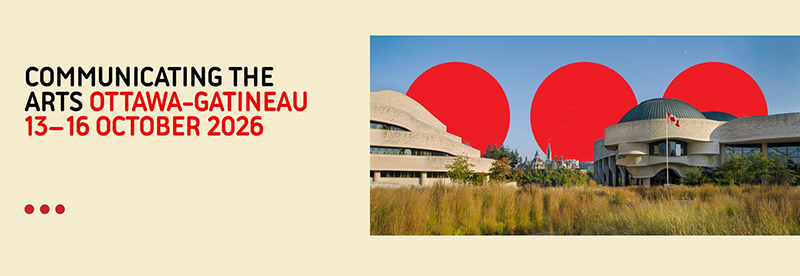
Communicating the Arts Ottawa–Gatineau brings cultural leaders together for three days of bold ideas, backstage access and dynamic conversation, exploring how cultural institutions can foster connection, empathy and understanding across communities and generations, particularly in times of change.
Dates: 13–16 October 2026
Venue: Canadian Museum of History & Canadian War Museum, Ottawa–Gatineau
Theme: “Building Trust, Bridging Worlds” (Construire la confiance, rouvrir le dialogue)
Reader offer:International Arts Manager readers get 50% off with code IAM50
Tickets: